Photo: David Jones, CC BY 2.0, via Wikimedia Commons
Here is what strikes me as strange, perhaps even unjust:
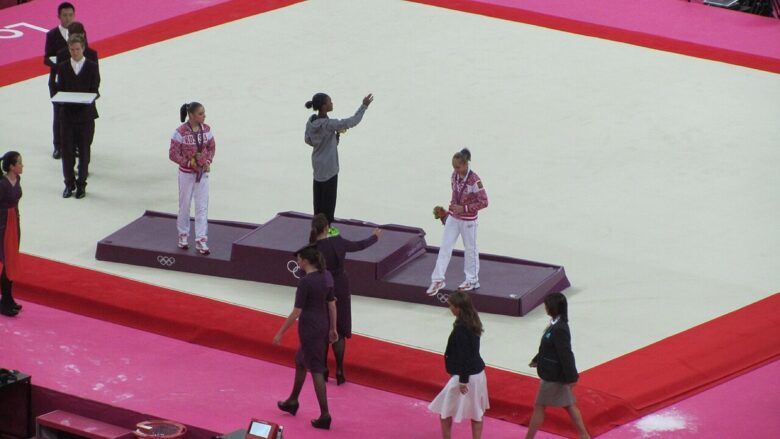
When someone achieves extraordinary success, becomes a billionaire through their own effort or wins Olympic gold through years of sacrifice, we grant them their distance. We do not expect the Olympic swimmer to feel at home in every pool, or to dive in just because someone hands her goggles. She has earned the right to be selective. Her achievement has carried her to depths most people will never reach, and we call this excellence.
But those of us who have survived impossible things and emerged transformed? We are expected to prove our healing by connecting with everyone. By trusting easily, as if we had never learned that trust can be weaponized. By maintaining no careful discernment about who receives access to our depths.
The expectation itself is the problem.
Consider what my childhood actually taught me. Every moment I felt the scarcity of love was teaching my heart what presence truly means. Every night I ached for safety was showing me what sanctuary I would one day create.
But knowing what is missing is not the same as knowing how to create it. I had to learn what I had never been taught, and sometimes unlearn what I had.
Now, when my children come to me with scraped knees or broken hearts, I know exactly how to hold that pain. Not despite my childhood, but because of what I chose to make of it.
This isn’t damage. It is hard-won expertise in a discipline most people are mercifully never required to study.
At school pickup, mothers gather to share their concerns: a child struggling with math, a teenager’s mood swings, the ordinary challenges of raising humans. I listen with genuine care. These struggles are real, and they matter.
I notice patterns I can’t unsee. Dynamics that suggest something deeper. I could offer observations that might genuinely help. But that level of engagement requires a different kind of relationship than friendship, and I am not naive enough to think I could be their therapist.
So I smile. I nod. I offer what comfort fits the moment.
This is the excellence I’m not allowed to claim.
At dinner parties, someone asks where I grew up. I feel the familiar calculation, not about shame or whether to reveal trauma, but about logistics.
I was born in Russia and raised partially in South Africa after being kidnapped there. Even that simple factual answer opens doors I know lead to a multi-hour conversation.
I’m genuinely proud of my story. But I also know it’s too substantial for the space we’re in. These people came for wine and appetizers, not a memoir reading.
So I obfuscate, not to hide, but to save everyone from what they’re accidentally about to embark on. “A few different continents,” I say, and sometimes we move on to lighter topics.
But other times someone insists I elaborate. Now I look anxious, not because I’m trying to save myself, but because I’m trying to save them. And I’m exhausted from always carrying the weight of the room, feeling like it’s my responsibility to protect people from themselves.
I learned early to manage other people’s emotions. It has served me well in some ways, but it has also made it difficult to recognize when their discomfort is no longer mine to carry.
This is the distance I’m not granted.
The swimmer is measured by her time in the water. The gymnast by her precision on the beam. No one expects them to excel at each other’s events.
But those of us who came through the impossible are measured by metrics our transformation has rendered obsolete: ease of trust, speed of connection, comfort in crowds. We have become something the old measurements cannot capture.
And here is the cruelty of it:
What began as guardedness has become selectivity.
What was once hypervigilance has transformed into attentiveness.
What reads as an inability to be vulnerable may be a reluctance to spend trust where it hasn’t been earned.
We take the outward appearance of a behavior and presume to know the inner life that produced it.
There are forms of wisdom that don’t announce themselves with confidence. Some are acquired through experiences most people will never have to endure, and others through the long, deliberate work of making sense of them.
I know what that education cost me. I also know that not everything it taught me was worth keeping. Some of it has served me beautifully, and some of it I am still learning to put down.
And yet the same wisdom that allows me to be a sanctuary for my children can make me feel foreign in rooms where no one has had to learn these things.
We have learned to recognize excellence in its most visible forms. Perhaps the harder task is seeing it when it looks nothing like what we’ve been taught to admire.
